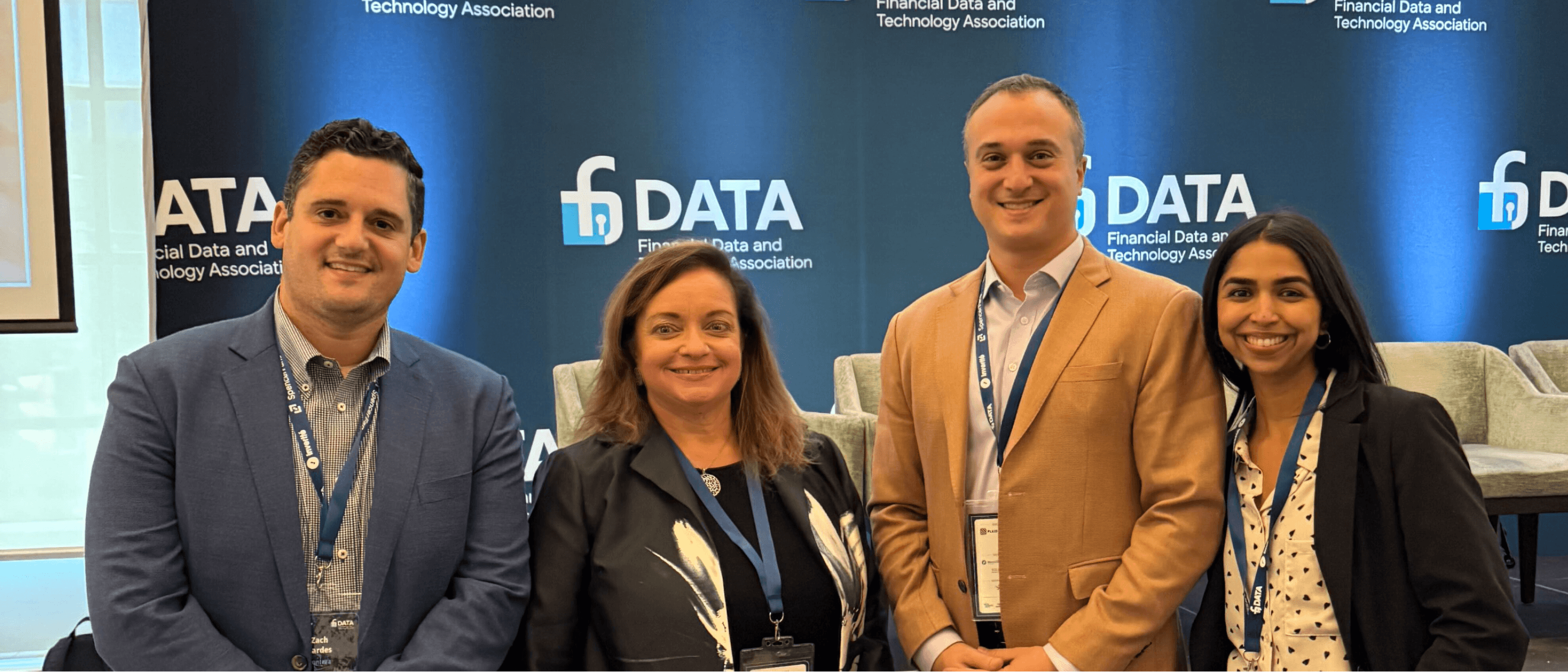



Pontera’s takeaways from the 2026 FDATA Summit
Across the world, policymakers support consumers’ ability to connect their financial accounts to useful tools. FDATA is a global association representing companies like Plaid, Xero, Intuit, and Trustly that build infrastructure to help consumers connect their financial lives. In response to these innovations, many financial institutions built APIs to support consumers’ ability to connect. Many others did not.
Now another layer of consumer-authorized activity is emerging: agentic AI.
With the rise of personal AI assistants, consumers are increasingly connecting their financial accounts to AI tools, including agentic tools that take action. That changes the equation for financial institutions, and for consumers. For financial institutions, their websites no longer serve only people; increasingly, agents will act on behalf of those people. For consumers, their ability to trust agents to act on their behalf depends on the controls and protections they can obtain.
Much of the financial ecosystem is not yet built for agent-to-agent communication. Many providers have not even built APIs, much less MCPs – while others lack the infrastructure to distinguish a person from an authorized agent.
That tension was a recurring theme at the recent FDATA Summit, where policymakers, financial institutions, and technology providers discussed the future of financial data and agentic AI. As consumers increasingly use third parties and AI agents to interact with their financial accounts, the industry needs infrastructure that can support that activity safely. That challenge grows as financial connectivity moves beyond read-only access toward a broader range of consumer-authorized activity.
The world is moving toward write access across financial accounts
The conversation is no longer just about whether consumers can securely view their financial information. Financial frameworks around the world have been increasingly extending beyond data sharing to consumer-authorized actions.
These frameworks are also expanding the types of accounts covered. In Canada and other countries, consumer data rights include retirement and investment accounts, reflecting an expectation that consumers should be able to manage their money across account types.
Some countries have already included activities such as transactions and rebalancing in their policy frameworks. In the U.K., Variable Recurring Payments allow consumers to give a third party standing authorization to make payments of varying amounts.
Together, these developments point toward a financial ecosystem that supports not just read access, but increasingly consumer-authorized write access.
Regulators are watching the rise of agentic AI
Regulators are paying close attention to how financial institutions are adopting AI. Increasingly, that attention also extends to how institutions are preparing for consumers to use agentic AI in their financial lives.
One example came from Kaitlin Asrow, Acting Superintendent of the New York State Department of Financial Services (NYDFS), who joined the Summit to discuss the evolving regulatory landscape. As part of New York State’s RAISE legislation, NYDFS published guidance for regulated financial institutions that manage AI-related risks, including guidance addressing cybersecurity and the use of AI within financial services.
As agentic AI expands, financial institutions will increasingly need to account for both their own use of AI and AI agents acting at a consumer’s direction.
Intermediaries can provide the trust layer
Not every financial institution has the infrastructure to govern automated activity on its own. That was part of the discussion when Pontera joined Spinwheel, Yodlee, and Spencer Fane at FDATA to explore the role third parties can play in protecting consumers, providers, and financial institutions.
A main takeaway from our closed-door session: Trusted intermediaries have the technology to provide infrastructure that can validate users, scope permissions, minimize unnecessary data sharing, and maintain records of activity.
Advisor adoption of AI is also raising questions about data minimization and control. The Summit discussion pointed to Anthropic and Charles Schwab’s read-only application as one example, including questions about how client data is used when financial accounts are connected to AI applications.
For financial institutions, these intermediaries can serve two roles: a trust layer for consumers and a protection layer for the institution.
The discussion reinforced something we at Pontera see in 401(k) advice today: trusted connectivity depends on clear consumer authorization, scoped activity, transparency, and strong records.
The takeaway: The next layer is trust
Trust was a consistent theme throughout the FDATA Summit.
Across conversations about APIs, write access, and agentic AI, the same challenge kept resurfacing: how to give consumers greater control while giving financial institutions the transparency and safeguards they need.
Agentic AI makes that balance more urgent. As agentic AI introduces new actors into an already complex financial ecosystem, trusted intermediaries emerged as an important part of that equation.
The technology may be changing quickly, but the principle is familiar: Consumers need control over their financial lives, and the institutions serving them need confidence in who is acting, what they are authorized to do, and how that activity is governed.
Stay ahead with insights on modern retirement
Unsubscribe anytime

